Mission Statement
To glorify God by making disciples of Jesus Christ through the truth of Scripture, the power of the Holy Spirit, and the hope of the Gospel.
Core Beliefs of Our Congregation
God is Sovereign
God is mysteriously and wonderfully Three-in-One and One-in-Three: Father Son, and Holy Spirit
Humanity was created perfect, but all have fallen into sin (rebellion against God).
No person or group can restore a perfect relationship with God on their own.
God initiated our rescue by sending His Son, Jesus, to perfectly redeem us at the Cross.
There is salvation (eternal rescue) in none other than Jesus, and all that truly seek Him will find Him.
Jesus, our Messiah (Christ) and Lord, is Head of the Church (across all years, places, denominations).
The Holy Spirit works in the lives of men and women to protect and guide them in living.
There will be an end to this current world, and Jesus will return to rule and judge and recreate.
The Church in this world is always a mixture of righteousness and failure to live righteously.
The Bible is God’s perfect Word to us, revealing our brokenness, God’s plan to redeem us, and His promises to those who seek him.
Our Story
-
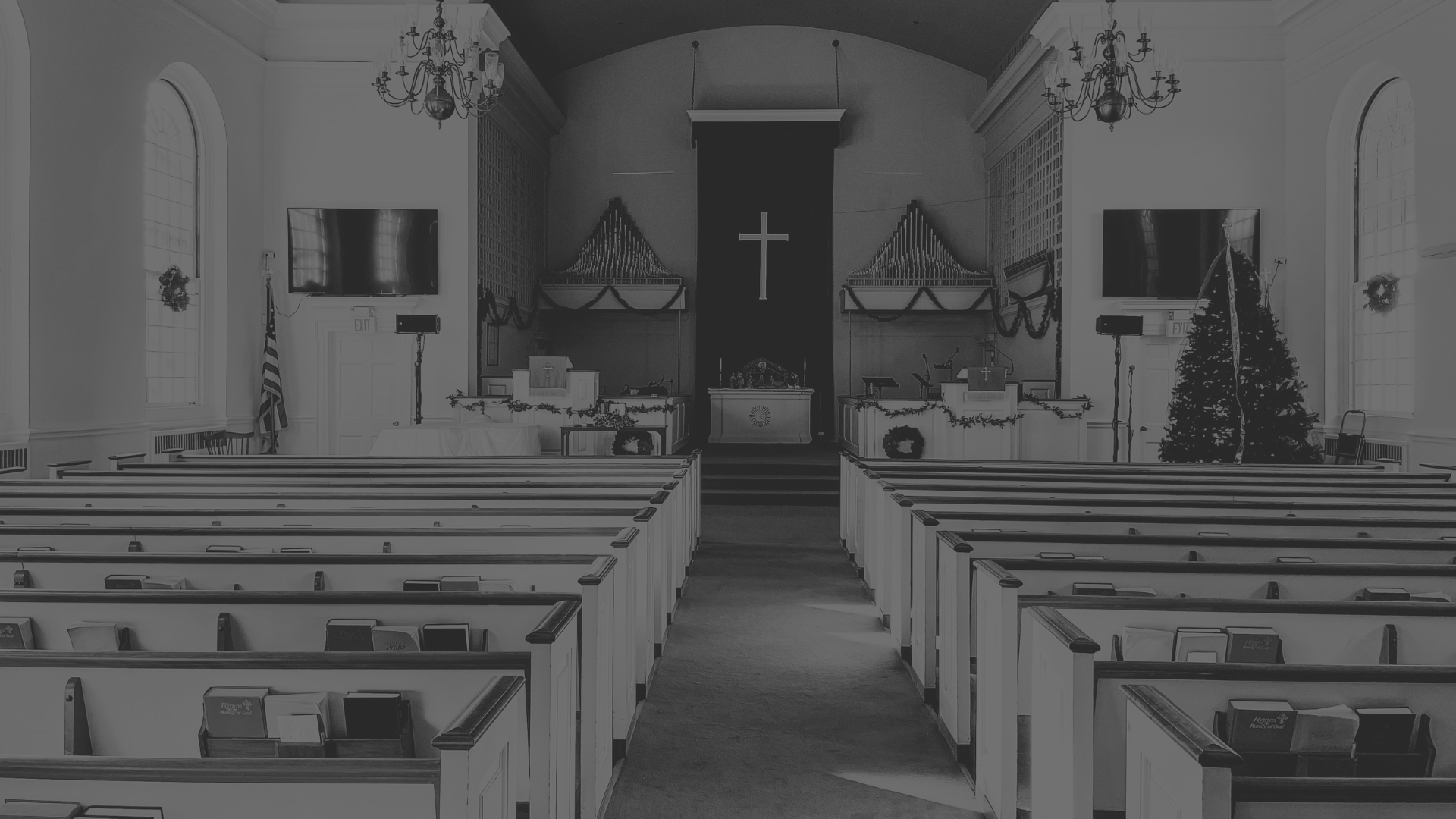
The story of First Presbyterian Church began on June 8, 1883, when a small group of believers from the Mineola area gathered with a shared desire to establish a place where God would be worshiped and His Word proclaimed. They organized the Mineola Village Church, electing Valentine Willis as Chairman and E. D. Skinner as Secretary. Meeting each Friday evening, this faithful congregation laid the foundation for what would become First Presbyterian Church.
Just a few weeks later, on June 29, 1883, the church elected its first Board of Trustees. Luke Fleet and William A. Willis were elected to one-year terms; G. W. Emery and H. C. Woodnut to two-year terms; and Valentine Willis and E. D. Skinner to three-year terms. William A. Willis also faithfully served as the church's first Treasurer.
Mineola was a much different community in those early days. Around the railroad station stood only about 30 homes within a three-block radius. To the east, Jericho Turnpike was bordered by approximately fifteen farms, along with two hotels that welcomed travelers passing through the growing village.
As the congregation grew, so did the vision for a permanent place of worship. Stephen Taber and Martha T. Willets generously donated the land on which the church still stands today, deeding it to the congregation on March 18, 1884. After careful planning, construction began in March 1886. The new church opened for worship in August and was joyfully dedicated on October 6 of that year, having been built at a cost of $3,200.
Even with such careful preparation, one important detail had been overlooked—heating. A tunnel was dug beneath the church to install a furnace, and arrangements were soon made to provide music for worship services. By the time these improvements were completed, the church carried a debt of $600. In an act of generosity, Mrs. Harriet Albertson provided an interest-free loan, which the congregation faithfully repaid within the first year.
Following the dedication, ministers from neighboring churches of various denominations filled the pulpit each Sunday for the modest sum of three dollars per service. Attendance steadily grew, soon averaging 150 worshipers. The church bell, known for its beautiful tone, was a gift from Colonel De Graw of Philadelphia. Later in 1886, horse sheds were constructed beside the church, and in 1889 they even served as storage for the Mineola Hook and Ladder Company's fire truck.
Looking toward the future, the congregation wisely purchased two adjoining lots for just $75. Luke Fleet coordinated the purchase and gathered the necessary funds, demonstrating the foresight and commitment that would continue to characterize the church for generations.
On June 12, 1888, the congregation formally reorganized and incorporated under the name Mineola Union Chapel Society. New bylaws were adopted that September, and the following month the church welcomed 24 new members, bringing the total membership to 41.
The church also became a place of hospitality for the wider community. By 1898, a German congregation was renting the chapel for morning worship, while the Mineola Union Chapel Society continued to hold its own services in the evening. From its earliest years, the church sought not only to establish a congregation but also to provide a place where others could gather to worship God.
-
As the new century began, the congregation entered a season of organization and steady growth. Under faithful pastoral leadership, the church embraced its Presbyterian identity while expanding its ministries and strengthening its place within the Mineola community.
As the congregation continued to grow, a new chapter began on January 8, 1902, when The Rev. B. F. Parliman was called as the church's first Presbyterian minister. Originally called to serve for one year, he remained for a second. During his ministry, an important step was taken on February 3, 1903, when the church property was leased from the Mineola Union Chapel Society to the newly formed Presbyterian Society, establishing the Presbyterian form of church government that continues to shape the congregation today.The ministries of The Rev. A. L. R. Waits (1904–1906) and The Rev. D. J. Lloyd (1906–1914) were marked by steady growth. During Rev. Lloyd's pastorate, the first Assembly Hall was constructed, providing much-needed space for fellowship, education, and ministry.
From its earliest years, the church sought to serve not only its own congregation but also the wider Mineola community. In 1909, the local Jewish community was welcomed to use the Assembly Hall for their gatherings. By the 1910 Annual Meeting, church membership had grown to 90, while the Sunday School continued to flourish. The weekly envelope system for church giving, reintroduced in 1911, became a lasting practice that strengthened the congregation's faithful stewardship.
As ministry expanded, so did the church's facilities. The Assembly Hall was enlarged in 1912 and, by 1914, was being used for athletic activities, reflecting the church's growing role as a gathering place for people of all ages.
In 1915, The Rev. F. E. Brooks became the church's fourth pastor. During World War I, he left to serve with the YMCA, while the Assembly Hall was opened as a recreation center for servicemen, allowing the church to minister to those serving during a time of national need.
A particularly significant era began in 1918 when The Rev. George G. Dunshee came from Newark, New Jersey, to serve the congregation. His 27-year pastorate would become one of the longest and most influential in the church's history.
-
The early 1920s were years of remarkable progress. A new organ enriched the worship services, and the Manse was constructed on land the church had wisely purchased decades earlier. Demonstrating careful stewardship, 95 percent of the funds needed for construction had already been raised before work began.
The Assembly Hall was expanded again in 1927, and by the mid-1930s the congregation recognized the need for improved facilities. A Building Council was established in 1936 to renovate the sanctuary and develop space for educational and fellowship ministries. The sanctuary was beautifully restored, and in May 1937 ownership of the church property was officially transferred from the Mineola Union Chapel Society to First Presbyterian Church.
Encouraged by a generous bequest of approximately $10,000 from Mrs. Anna D. Albertson and by the continued growth of Mineola, the congregation voted in 1940 to construct a Church School building. Members faithfully pledged the funds needed over a thirty-month period, with furnishings later purchased through a modest mortgage. This commitment reflected the congregation's desire to invest in the next generation of Christian education.
The church also continued to strengthen its worship ministry. Renovations to the choir loft and the installation of a beautiful new organ in 1944 encouraged the growth of a vibrant music ministry that would bless the congregation for decades.
As pastoral responsibilities increased, The Rev. Edward J. Machle was called as Assistant Pastor in 1944. The following year, Rev. Dunshee requested retirement after nearly three decades of faithful ministry and was to be honored as Pastor Emeritus. Before those plans could be realized, however, the congregation was deeply saddened by his unexpected passing. More than 500 people gathered to celebrate the life and ministry of a pastor whose faithful service had profoundly shaped the church.
-
Following Rev. Machle's departure into the field of education, the congregation called The Rev. Kermit J. Nord, who was installed in February 1946. Rev. Nord brought fresh vision and new ideas to the church. While many of these changes represented a new direction, they strengthened both the congregation and its ministries.
Under Rev. Nord's leadership, membership grew from approximately 600 to more than 1,100 people. Sunday School expanded significantly, requiring two sessions to accommodate the growing number of children and families. New ministries flourished, including the New Life Movement, the Men's Club, the Young Adult Group, Westminster Fellowship, the Pre-School Mother's Study Group, and an expanded music ministry led by the church's first Minister of Music.
One of the congregation's long-held dreams was the construction of a new sanctuary. As membership continued to grow, that vision became a necessity. Beginning in 1952, members generously contributed to a new building fund, raising nearly $87,000. A new parsonage was purchased, making room for construction of the present sanctuary, which was completed in 1956 at a cost of $235,000. Through the faithful giving of the congregation, the ten-year mortgage was completely paid by 1966 and celebrated with a joyful mortgage-burning service.
The new sanctuary was further enriched by the generous gift of the Colombo family, who donated the magnificent Casavant pipe organ, featuring three manuals, forty stops, and 2,460 pipes. Carpeting and pew cushions were later added, creating the beautiful worship space enjoyed today.
In 1971, First Presbyterian entered into a merger with St. Paul's United Methodist Church in Mineola. As part of this partnership, a portion of the education building was converted into St. Paul's Chapel, where several artifacts from the Methodist congregation remain today. The former Methodist parsonage became a counseling center, while the church building served as a youth center until it was later destroyed by fire. The remaining property was sold in 1981.
After 29 years of faithful service, Rev. Nord retired in 1975. Although the later years of his ministry included challenges and a decline in membership, his pastorate is remembered for its remarkable growth, commitment to outreach, and spirit of cooperation with the wider Christian community.
-
Like many churches, First Presbyterian experienced seasons of both joy and challenge. Even during times of transition, God remained faithful, providing leaders who guided the congregation with wisdom, healing, and hope.
The Rev. David L. Bucci was called as pastor later that year and served until 1981. His ministry brought significant changes to the congregation, and differing theological convictions ultimately led to a period of division, with a number of members joining the new congregation he established following his resignation.
During this difficult season, The Rev. Richard W. Lund faithfully served as Interim Pastor beginning in November 1981. His ministry brought encouragement, healing, and renewed hope as the congregation prepared for its next chapter.
In 1983, The Rev. Robert Duncan was called as the next installed pastor. Together with his wife, Polly, he served faithfully in strengthening the church's spiritual life and commitment to evangelism and missions. Like many churches across Long Island during changing cultural times, First Presbyterian experienced a gradual decline in membership, though its ministry remained active and faithful.
After Rev. Duncan accepted a call to Pennsylvania in 1991, The Rev. Edward Poole served as Interim Pastor while the congregation searched for its next shepherd. During this time, the church began partnerships with immigrant congregations that shared its theological convictions, welcoming both Korean and Brazilian congregations into its facilities.
-
A new and enduring chapter began in July 1993 when The Rev. Chester J. Easton was called as pastor. Rev. Easton emphasized faithful biblical preaching, Christian education, children's and youth ministries, missions, and wise administration.
Alongside him, his wife Dottie Easton faithfully led the church's music ministry and helped reestablish Vacation Bible School, which reached hundreds of families throughout the surrounding communities from 1995 through 2017. Music, drama, youth ministry, camps, conferences, and service projects became defining features of church life, with many young people professing faith in Christ during these years.
Throughout Rev. Easton's ministry, First Presbyterian also continued its tradition of hospitality by sharing its facilities with several congregations from diverse cultural backgrounds. The Brazilian congregation, Presbyterian Christian Community (CCP), has remained a valued ministry partner, and since 2019 the church has also shared its campus with Edge City Church.
In 2025, after 32 years of faithful ministry, Pastor Chet and Dottie Easton concluded their service at First Presbyterian. The congregation celebrated their decades of faithful leadership and the lasting impact they made on countless lives.
-
Today, First Presbyterian Church continues to pursue its calling with a strong commitment to spiritual growth, biblical teaching, prayer, and welcoming people from every cultural, economic, and racial background. The church remains a place where ministry extends beyond Sunday worship, serving as home to partner congregations and numerous community organizations. For generations, it has supported Boy Scout Troop 45, Cub Scout Pack 246, Alcoholics Anonymous, Classical Conversations, and, more recently, a local theater group.
Like many churches across the country, First Presbyterian has experienced changing demographics, declining membership, and the challenges that come with maintaining a historic campus. Yet the congregation remains deeply grateful for God's faithfulness through every generation. From the faithful believers who first gathered in 1883 to those who worship today, countless lives have been transformed through the ministry of this church. With hope in Christ, First Presbyterian continues to look forward, trusting God to write the next chapter of its story.